Ask a dive guide in Hurghada what actually goes wrong on a season of boats and you will not hear a single dramatic story. You will hear the same short list: somebody brushed fire coral, somebody could not clear their ears, somebody spent four hours in the sun without a hat, and somebody ate a salad they should not have. The genuinely serious things are rare. The nuisances are common, and most of them are preventable or fixable within ten minutes if you know what you are looking at.
This is general first-aid information for visitors, not medical advice, and none of it replaces a doctor. When a section says see a doctor, that is the point of the section.
What actually sends visitors to a doctor on the Red Sea
In rough order of how often it happens:
- Ear and sinus problems — by a wide margin the most common, and the one that ends dive days.
- Skin contact injuries — fire coral, jellyfish, sea urchin spines, coral scrapes.
- Heat, sun and dehydration — underestimated by almost every visitor from a cooler climate.
- Stomach upsets and seasickness — unpleasant, rarely dangerous, occasionally both.
- Decompression illness — rare, serious, and time-critical, which is why it gets its own section below.
Marine stings, spines and cuts
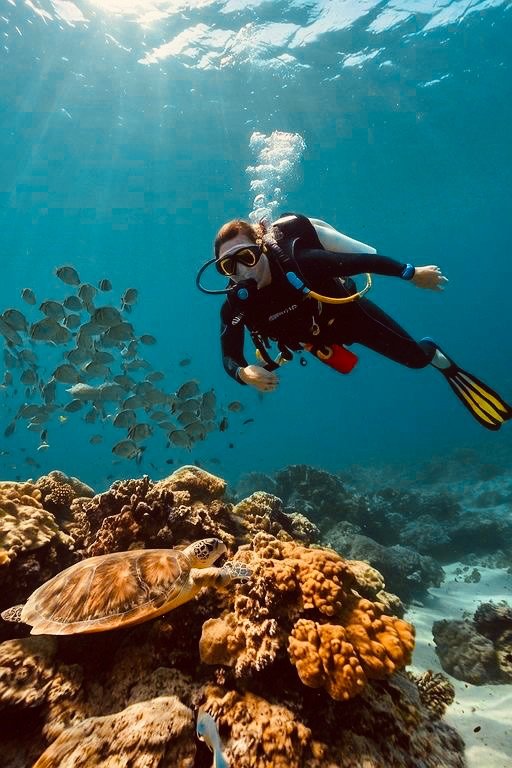
The Red Sea is not a dangerous sea. Almost everything that hurts a visitor is defensive: you touched it, knelt on it, or put a hand where a hand did not belong. The universal rule is simple — do not touch anything, and keep your hands off the reef — and the universal first response is to get out of the water calmly rather than thrash.
Fire coral
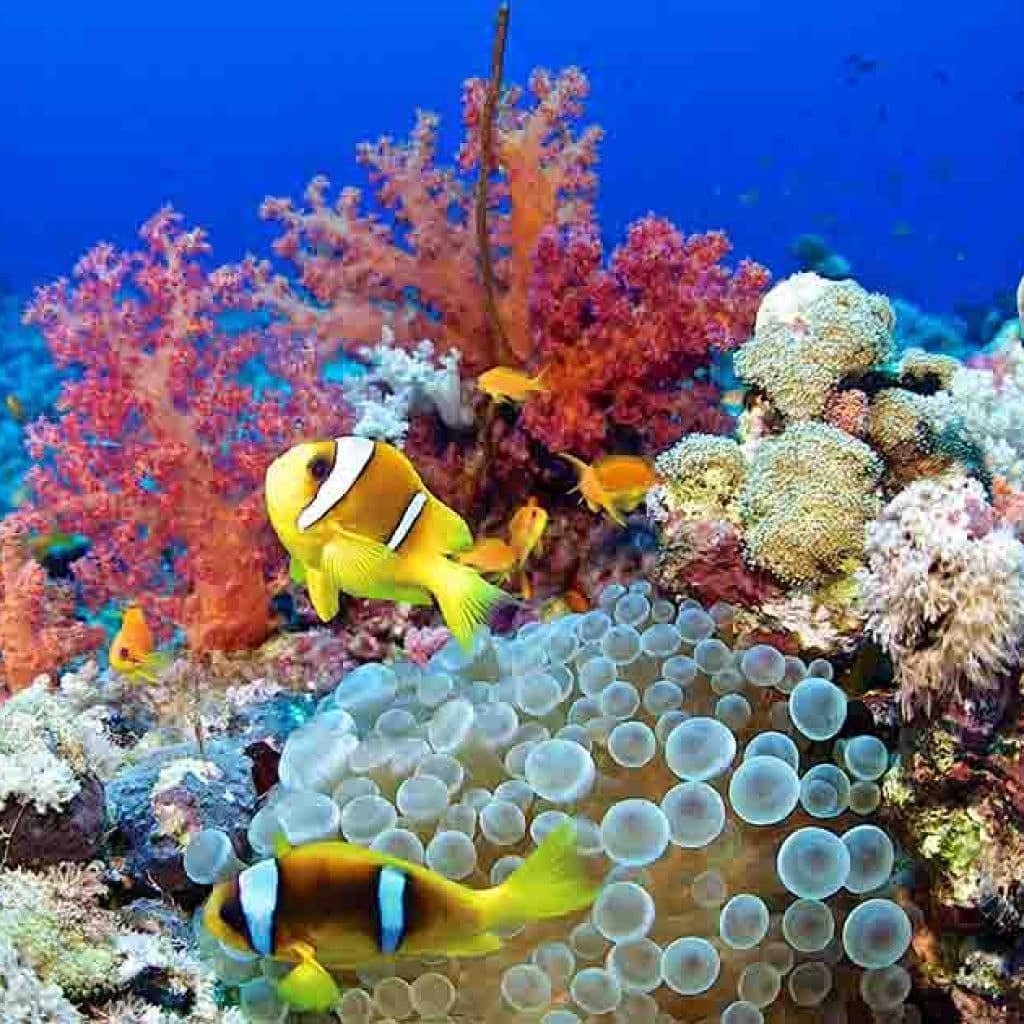
The most common sting in Egypt by far, and usually a brush against a mustard-brown branching coral. Expect an immediate burning welt that itches for days. Rinse with seawater rather than fresh water, do not rub the area, and keep it clean and dry. A pharmacist can advise on an antihistamine or a soothing cream. See a doctor if the rash spreads, blisters badly, or you feel unwell rather than just sore.
Jellyfish
Stings in the Red Sea are usually mild and local. Leave the water, rinse with seawater — not fresh water, which can make undischarged stinging cells fire — and lift off any remaining tentacles with a gloved hand, tweezers or the edge of a card rather than bare fingers. Local guidance in some regions suggests vinegar for certain species; follow what the boat crew and local medical advice say rather than internet folklore, and skip the urine, alcohol and hot-sand remedies entirely. Any sting with breathing difficulty, chest pain, faintness or a very large affected area is an emergency, not a first-aid matter.
Sea urchin spines
Usually a foot, usually on an entry over rocks, usually avoidable with reef shoes. Spines are brittle and break off under the skin. Do not dig them out with a knife on the boat. Immersing the area in water as hot as you can comfortably tolerate — around 45 °C, tested on your own hand first, never on a numb foot — eases the pain for most people. Any spine that is deep, in a joint, or still visible after a day belongs to a doctor, as does any redness that spreads.
Lionfish, scorpionfish and stonefish
Beautiful, common, and venomous in the spines. They do not chase anybody; people get stung by touching, kneeling or reaching. A sting is intensely painful. Get out of the water, immerse the limb in hot water at the temperature above, and go to a doctor the same day — a stonefish sting in particular is a medical emergency, and severe pain that keeps rising is a reason to move immediately rather than wait it out.
Coral cuts and grazes
The wound itself is minor; the problem is that coral cuts get infected easily in warm water. Clean it properly with soap and clean water as soon as you are ashore, remove visible debris, apply an antiseptic, cover it, and keep it out of the sea until it has closed. Redness spreading around the edges, swelling or pus a day or two later means a doctor, not more antiseptic.
Moray eels and other bites
Genuinely rare and almost always the result of a hand in a hole or someone feeding fish. Any marine bite that breaks the skin needs cleaning, medical assessment and a check on your tetanus status.
Ears: the most common diving complaint of all
More holidays are shortened by ears than by anything else on this coast. The mechanics are simple: the middle ear needs the same pressure as the water around it, and the only way in is a narrow tube from the back of your nose. Anything that blocks that tube — a cold, allergies, sinus congestion — turns a routine descent into an injury.
- Equalise early and often, starting at the surface and repeating every metre or so. Gently: a violent Valsalva does its own damage.
- Never force a descent. If it hurts, stop, ascend a metre, try again. If it still will not clear, end the dive. The reef will be there tomorrow.
- Do not dive with a cold or a blocked nose, and be careful with decongestant sprays that wear off at depth and let the ear block on the way up — ask a doctor rather than self-medicating.
- Ear pain, muffled hearing, ringing, dizziness or fluid after a dive is a same-day medical question, not a wait-and-see. Do not dive again until you have been told it is safe.
Swimmer's ear — an outer-ear infection from days of warm water — is the other classic. It shows up as itching, then pain when you tug the earlobe, and it is treated by a doctor with drops. Rinsing ears with clean fresh water after diving and drying them properly prevents most cases.
Heat, sun and dehydration
The Egyptian sun does not feel as strong as it is: there is a sea breeze on the boat, the air is dry, and sweat evaporates before you notice it. Then somebody stands up at the end of the day and feels the world tilt.
- Drink through the day, not at the end of it — two litres across a boat day is a reasonable baseline, more in summer.
- Cover up. A rash vest, a hat and shade on the crossing beat any amount of sunscreen, and reef-safe sunscreen on what is left.
- Salt matters as much as water on a long hot day; an oral rehydration sachet from any pharmacy is cheap and works.
- Heat exhaustion — heavy sweating, headache, nausea, weakness, a fast pulse — means shade, cool water inside and outside, and rest. It responds well to being taken seriously early.
- Heatstroke — confusion, no sweating, very hot skin, collapse — is an emergency. Cool the person aggressively and get medical help immediately.
Dehydration also matters for a specific diving reason: it is one of the risk factors for decompression illness that you control completely.
Stomach upsets, seasickness and sleep
Traveller's diarrhoea is the most common illness of any holiday anywhere, and Egypt is no exception. Bottled or filtered water, no ice you cannot vouch for, hot food served hot, and fruit you peel yourself. Rehydration sachets are the treatment for the ordinary version. Fever, blood, or symptoms that last more than two or three days is a doctor.
Seasickness is a boat problem, not a stomach problem: eat something light, stay on deck where you can see the horizon, avoid the cabin and your phone, and take any medication the evening before rather than as you cast off. Choose a non-drowsy option — anything that makes you sleepy has no place before a dive — and ask a pharmacist rather than a fellow passenger.
And sleep. Three dive days on four hours of sleep produces exactly the kind of inattentive diver who loses a fin, misses a signal and surfaces too fast.
How do you know if it is decompression sickness?
You often do not, and that is precisely why the rule is to report it rather than diagnose it. Symptoms usually appear within an hour or two of surfacing but can be delayed, and the classic ones are unglamorous: unusual fatigue, joint or limb pain, tingling or numbness, weakness, dizziness, an itchy rash, difficulty breathing, confusion.
What to do, in order:
- Tell the guide or crew immediately. Do not go back in the water, and do not wait to see how it feels tomorrow.
- Oxygen, as early as possible. Every boat we sell trips on carries it, and giving it early is the single most useful step there is.
- Fluids by mouth if the person is fully alert, and rest lying down.
- Medical assessment ashore. A doctor decides whether a recompression chamber is needed — the Red Sea coast has them, because this is a diving region.
- Call your insurer's emergency line early, ideally before treatment starts. Most policies require notification, and many can arrange direct settlement with the hospital.
- Do not fly. Flying with untreated decompression illness makes it worse.
Most suspected cases turn out to be dehydration, a strained muscle or an ear barotrauma. That is a good outcome, not an embarrassment, and no decent dive centre will make you feel foolish for speaking up.
How long after diving can you fly?
The widely used recreational guidance is at least 18 hours after multiple dives or several days of diving, and many divers and operators here work to a full 24 hours for a margin. A single no-decompression dive is often given a shorter minimum, but the practical planning rule for a holiday is simple: keep the last day of your trip dry. Book the reef day earlier in the week and spend the final day on land — the desert, a museum, a lazy hotel morning. It costs nothing and removes the one scheduling mistake that turns a good week into a medical problem.
The same logic applies to altitude: mountain roads and high-altitude excursions after diving deserve the same waiting period.
Where do you find a doctor on the Red Sea coast?
Hurghada and Marsa Alam are established tourist regions, and the layers work about like this:
- Pharmacies are everywhere, open late, and pharmacists are often the fastest sensible first stop for minor problems — stings, sunburn, rehydration salts, mild stomach upsets.
- Hotel doctors and walk-in clinics handle the ordinary run of holiday complaints, usually the same day.
- Private hospitals in both towns are used to treating visitors, and the coast has recompression chambers for diving injuries.
- Your insurer's 24-hour assistance line should be the call you make early rather than late — for anything beyond a pharmacy visit, it is what decides whether you pay and reclaim or the insurer settles directly.
What we can do: if something happens on a trip you booked with us, we will point you to the nearest appropriate pharmacy, clinic or hospital, help with the language, and produce the operator-side documents your insurer will ask for — booking confirmation, invoice, dive profile and an operator incident report — at no charge. We are a diving platform, not a medical provider and not an insurance intermediary: the treating doctor makes every clinical decision, and your policy decides what is covered. The paperwork side is explained in detail in our guide to diving, health and travel insurance.
A small kit that prevents most of this
- Reef shoes for rocky entries, and gloves only where the operator allows them.
- A rash vest — sun protection, sting protection, and no sunscreen slick on the reef.
- Antiseptic, plasters and a small roll of tape for coral grazes.
- Oral rehydration sachets, an antihistamine and any personal medication in its original packaging.
- Your own mask, so a leaking rental does not put your face in the reef.
- Insurance policy number and emergency number, on paper as well as on the phone.
Dive it carefully and none of this happens
The overwhelming majority of visitors go home with nothing but photographs. Good buoyancy keeps you off the reef, an honest briefing keeps you out of trouble, hydration keeps your head clear, and an operator that checks certifications and carries oxygen is the reason the rare thing stays rare. Browse guided dives, courses and snorkelling days, read the site briefings before you choose, and pick the day that matches how you actually feel that morning.
The reef only asks one thing of you: look, and do not touch.
The admin side of an incident — who to call, in what order, and which documents to keep — fits on one page: travel insurance made simple.