Yes, there are sharks in the Red Sea — reef sharks, oceanic whitetips, hammerheads, and reef whitetips among them. For most visitors that is genuinely good news: shark encounters are one of the reasons experienced divers travel here specifically, not a reason to hesitate.
Which sharks will you actually see?
- Oceanic whitetip sharks: the headline species, most reliable at offshore reefs like Elphinstone from October to December.
- Hammerhead sharks: pass seasonally through the same offshore sites, same general window.
- Grey reef sharks: occasional sightings on deeper Hurghada reefs, more often in the afternoon.
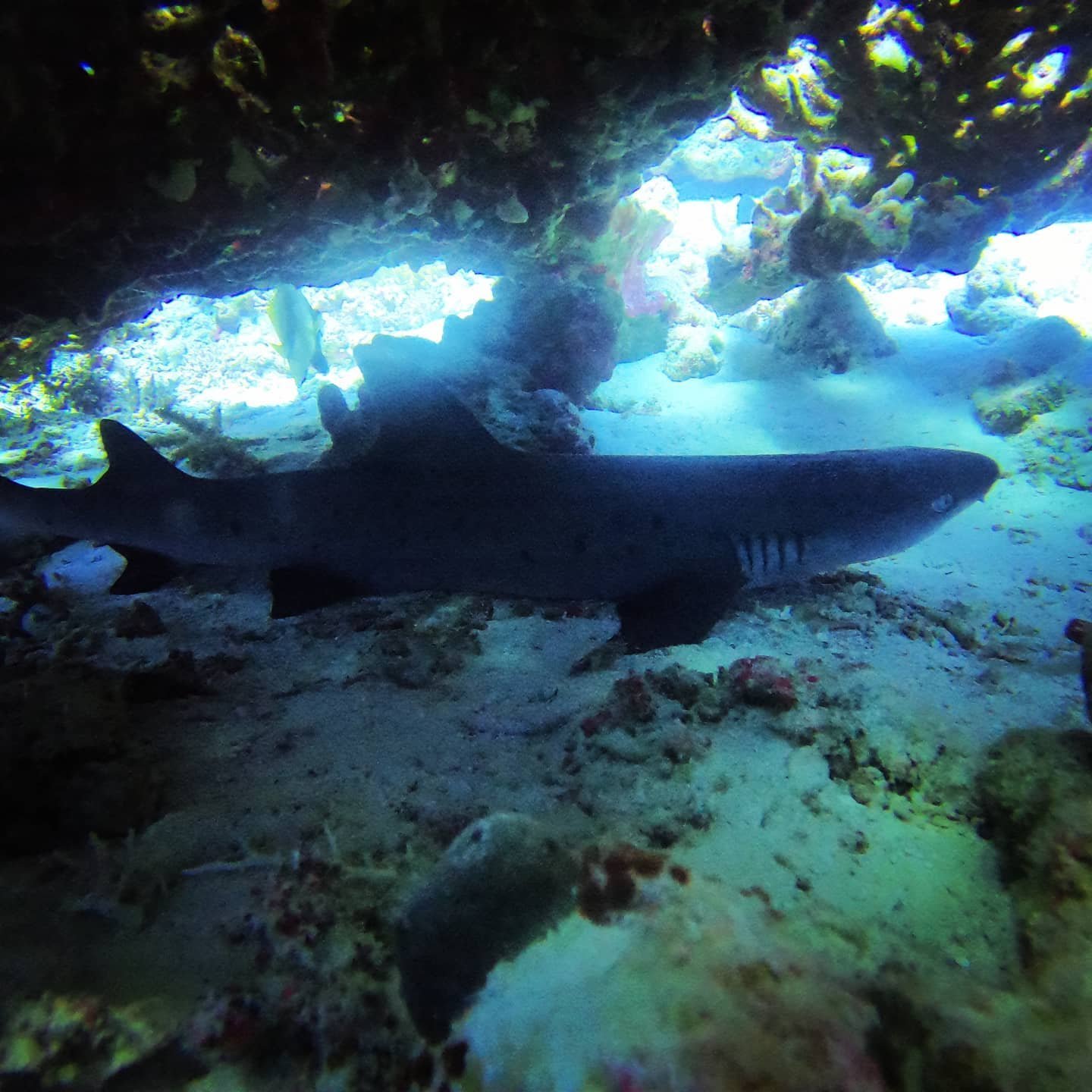
- Whitetip reef sharks: the smallest and shyest of the group, resting on the sand or under overhangs by day.
None of these are the animals people picture from film — great whites and tiger sharks are not part of normal Red Sea diving. What you are actually likely to see are shy, wide-ranging predators that want distance from you at least as much as you want distance from them.
Are Red Sea sharks dangerous to divers?
Shark incidents in the Red Sea are rare, and the handful that make international news over the years are almost always tied to specific, avoidable circumstances — usually feeding activity near beaches, not open-water diving. On a normal guided dive, sharks that are seen at all are typically seen at a distance, cruising past rather than approaching. The operators we work with brief every dive and will not put divers in the water where local conditions make an encounter genuinely risky.
Where do you actually see sharks while diving here?
Offshore, exposed reefs standing alone in open water — Elphinstone above all, see our complete Elphinstone guide — concentrate the pelagic species because the current sweeping past them concentrates food. Sheltered inshore reefs, the kind most beginner dives use, see sharks far less often, which is part of why they are chosen for beginners in the first place.
Do you need a special certification to dive with sharks?
No separate "shark diving" certification exists in the PADI system. What matters is being certified for the site itself — the offshore reefs where sharks are most reliable are Advanced Open Water sites because of depth and current, not because of the sharks specifically.
What about Makadi Bay and the resort beaches?
Shark sightings very close to shore are rare and are treated seriously when they happen — beaches are closed by the authorities as a precaution, which is the system working as intended, not evidence of a routine danger. It is a different situation entirely from an open-water dive with a briefed guide.
See them properly, on a real dive
If sharks are the reason you are planning this trip, book a site that actually has them rather than hoping for a lucky encounter on any reef — Elphinstone in the October–December window is the honest recommendation. Browse the wider dive site guides for depth, difficulty and marine life at every site we run.