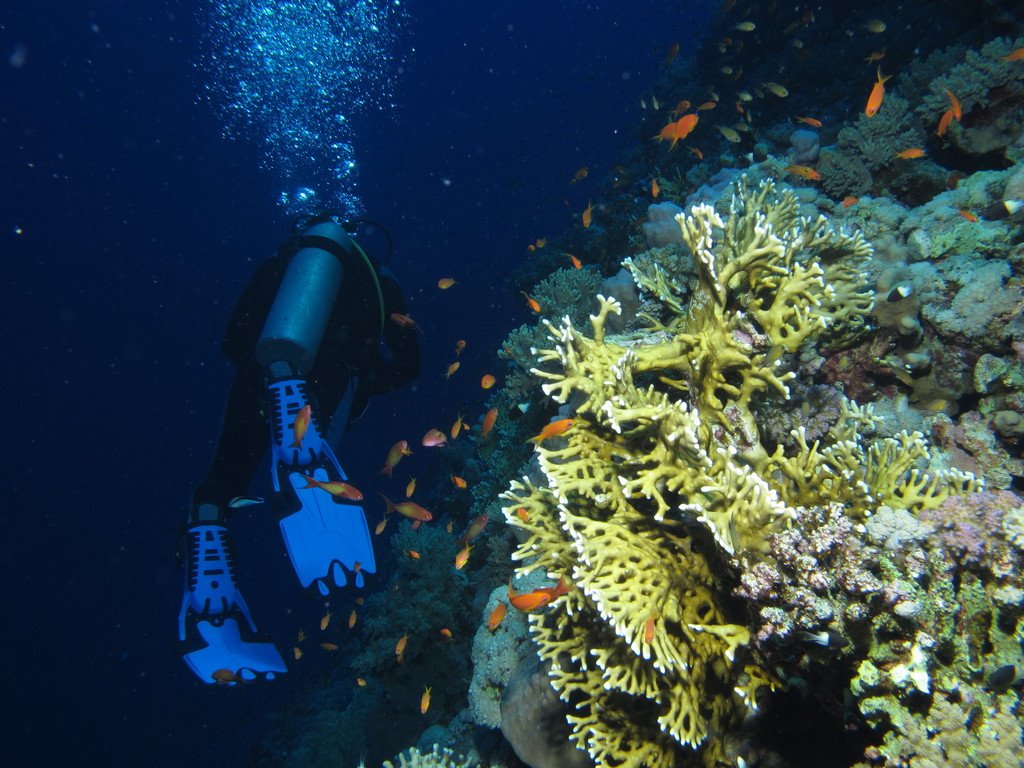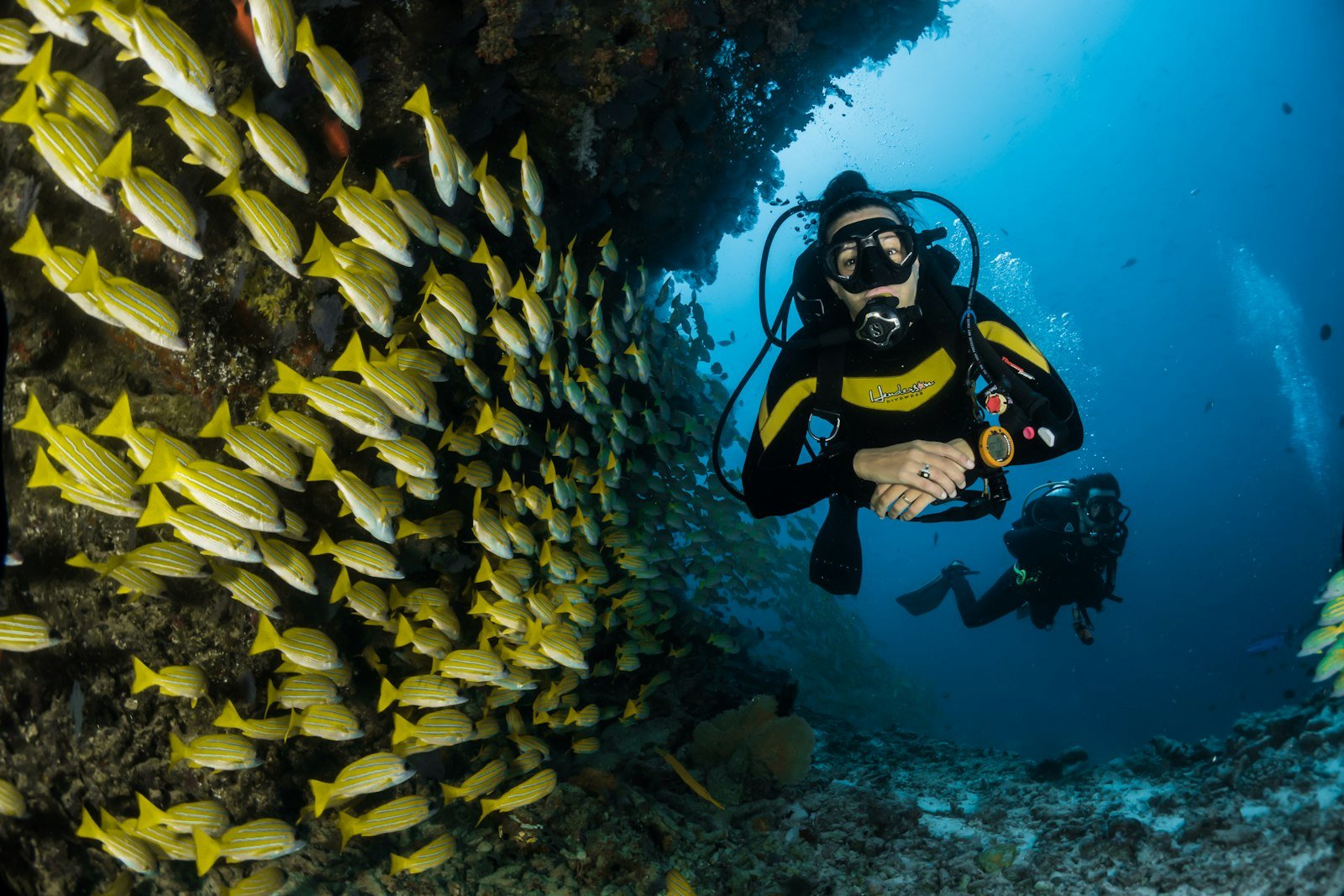
Egypt is where a very large share of the world's divers get certified, and where many of them keep coming back. The reasons are practical rather than romantic: the Red Sea is warm all year, visibility regularly exceeds 25 metres, the reefs start a few hundred metres from shore, and the whole thing costs a fraction of the Maldives or the Caribbean.
This guide pulls together the decisions you actually have to make before booking.
Where should you base yourself?
Hurghada is the practical default. It has the most flights, the widest choice of dive centres, and reefs like Abu Nuhas and Shaab El Erg within an hour of the marina. It is also the cheapest place in Egypt to learn.
Marsa Alam is quieter and wilder. The reefs are less trafficked, and it is the realistic base for dugongs at Abu Dabab and for the offshore reefs of Elphinstone. Flights are fewer and transfers longer.
If you cannot decide, we wrote a direct comparison: Hurghada vs Marsa Alam.
Do you need a certification to dive in Egypt?
No — not to get in the water. A Discover Scuba Diving session lets an uncertified adult dive to 12 metres with an instructor holding the safety margin. It is a real dive, not a pool demo.
You do need certification to dive without an instructor, to go deeper than 12 metres, or to join standard two-dive day trips. The entry-level card is the PADI Open Water Diver, which takes three to four days and is valid for life, worldwide.
What does a diving holiday in Egypt cost?
Roughly, per person, in 2026:
- Single day, two dives: from around €44 with equipment included
- Open Water certification: from around €326 all-in
- A week of diving: from around €200 for a multi-day package — the per-dive price drops sharply the more days you book
Flights and hotels sit on top and vary far more than the diving does. We break the whole budget down in How much does a Red Sea diving holiday cost.
When is the best time to go?
There is no closed season. Water sits between 22°C in February and 30°C in August. Most divers aim for April–June or September–November: warm water, calmer wind, and fewer crowds than mid-summer. Sharks and larger pelagics are more reliable in the cooler months.
The month-by-month detail is in Best time to dive the Red Sea in 2026.
Which sites are worth planning around?
The SS Thistlegorm is the one wreck most divers travel for — a WWII supply ship with motorcycles and trucks still in her holds. Beyond that, Abu Nuhas holds four wrecks on one reef, Elphinstone draws oceanic whitetips in autumn, and the Giftun reefs off Hurghada are the everyday workhorses: healthy hard coral, turtles, and easy conditions.
Our full list is at Red Sea dive sites, and the ten we rate highest are in 10 best diving sites in the Red Sea.
How many days of diving should you book?
Two days is enough to shake off the rust. Four to five days is where a trip starts to feel like a diving holiday rather than a hotel stay with dives attached. Packages run from 2 days / 4 dives up to 10 days / 20 dives, and the cost per dive falls with every day added.
Practical points people forget
- No flying for 18–24 hours after your last dive. Plan the final day as a surface day.
- Bring your certification card and logbook. A photo of the card is usually accepted; the physical one never fails.
- Insurance: check that your policy covers recreational scuba to the depth you plan to dive.
- Reef safety: nothing to touch, nothing to take. Egyptian marine park rules are enforced.
Ready to put dates on it? Browse all Red Sea trips and courses or tell us what you want and we will plan it.