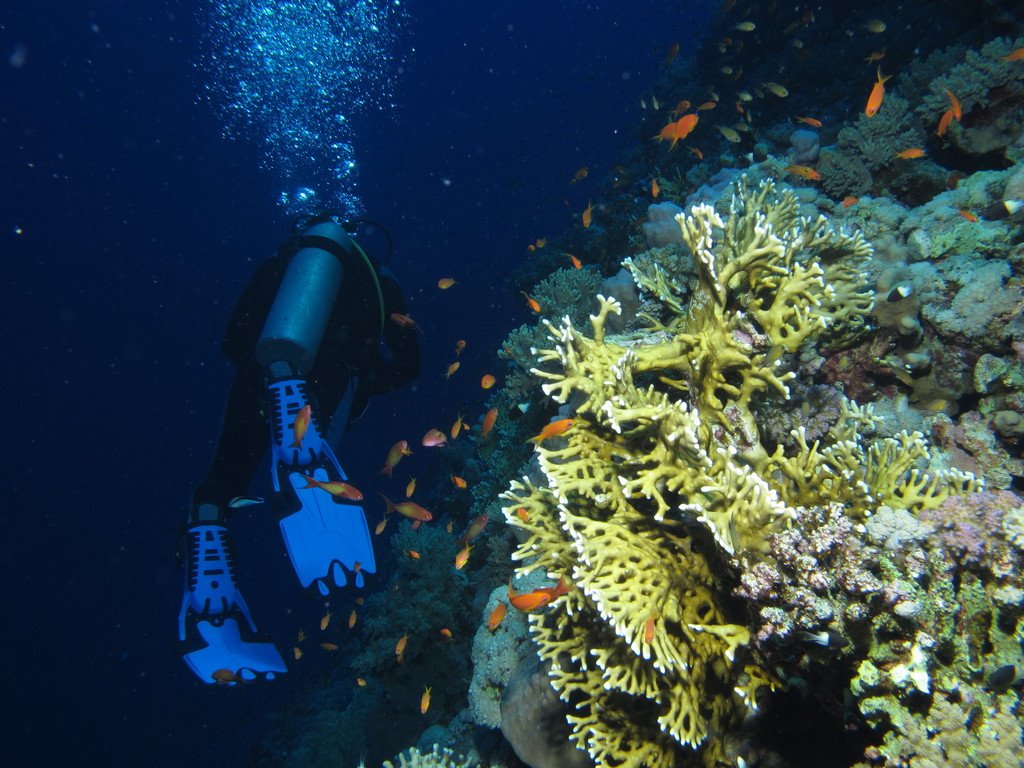
Parents ask two questions: is it safe, and is my child old enough. Both have clear answers, set by international standards rather than by individual dive centres.
From what age can a child scuba dive?
The thresholds are fixed:
- Age 8 — PADI Bubblemaker. Shallow water, maximum 2 metres, fully supervised. A first taste of breathing underwater.
- Age 10 — Junior Open Water Diver certification, with a 12-metre limit and an adult diver required.
- Age 12 — Junior Advanced, deeper limits, still accompanied.
- Age 15 — the junior qualification converts to a full adult certification.
No reputable centre bends these. If one offers to, that tells you what you need to know about the rest of their standards.
What is the Bubblemaker actually like?
A short, shallow, closely supervised session — usually in water they can stand up in. Children wear scaled-down equipment and an instructor is within arm's reach the entire time. It lasts under an hour, and most of that is fun rather than instruction.
It is not a certification and does not lead anywhere directly. It answers one question: does your child enjoy this?
Is snorkelling the better option for younger children?
Very often, yes. Red Sea reef starts about a metre below the surface, so a child floating on the top sees close to what a diver sees at five metres. There is no equipment to manage, no depth limit, no ear-clearing, and no time limit.
A snorkelling boat trip also keeps the whole family on the same boat, which the split of "divers go out, everyone else waits at the hotel" does not.
How do you plan a trip where everyone gets a holiday?
The pattern that works:
- Book your diving as a package with rest days built in rather than consecutive days.
- Put the family snorkelling trip on one of those rest days — same sea, everyone together.
- If a child does the Bubblemaker, schedule it early in the trip; if they love it, there is time for a second session.
- Consider a private boat charter for a mixed group — divers and snorkellers on one boat, on your own timetable. For families it often costs less than it sounds once split.
Practical things worth knowing
- Sun is the real risk, not the water. Rash vests beat sunscreen on a boat, and reef-safe sunscreen for everything else.
- Ear equalising is harder for children. If they cannot clear, the dive stops — that is normal and not a failure.
- Seasickness: choose shorter boat rides for a first outing; the closer reefs are 20–30 minutes out.
- Flying rule applies to children too — no diving in the 18–24 hours before the flight home.
Can a parent learn to dive while the children snorkel?
Yes, and it is a common arrangement. The Open Water course runs over three to four mornings, leaving afternoons free. Some families put one parent in the course while the other takes the children snorkelling, then swap the next trip.
Tell us the ages and dates on the trip request form and we will put together something that works for the whole group.