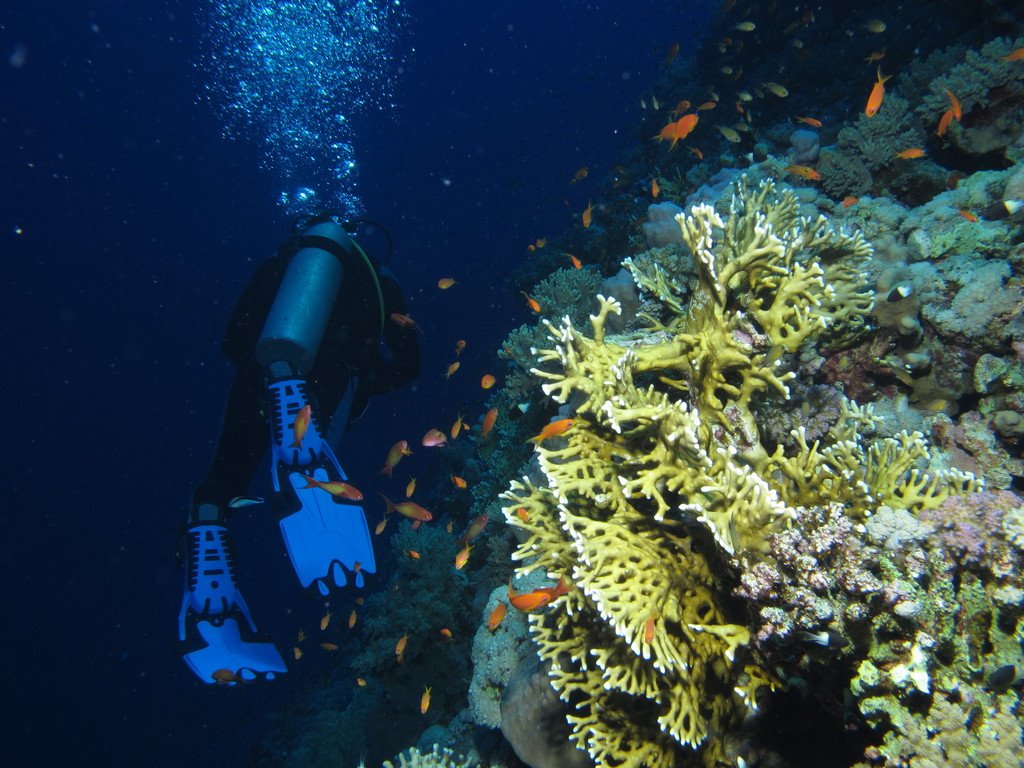
Хургада - одно из самых дешевых и простых мест в мире для получения сертификата, именно поэтому выбор сбивает с толку. Здесь доступно более десятка курсов PADI, и названия очень мало говорят о том, какой из них вам нужен. Это полный список, в том порядке, в котором дайверы на самом деле работают с ним.
Если вы никогда не ныряли
Три варианта, и разница между ними заключается в том, сколько вы хотите уйти.
Подводное плавание является единым контролируемым опытом, а не сертификатом. Полдня, короткий инструктаж, затем неглубокое рифовое погружение с инструктором рядом с вами все время. Если вы только хотите знать, любите ли вы дышать под водой, начните здесь - и все, что вы узнаете, будет считаться реальным курсом после этого.
Дайвинг это короткая сертификация: два дня, около половины теории и погружений полного курса, а также пожизненная карта, которая позволяет погружаться на 12 метров с профессионалом. Он существует для людей, чей отпуск слишком короткий для полного курса, и он обновляется позже с полным кредитом на все, что уже сделано.
PADI Open Water Diver это то, что большинство людей имеют в виду под «получением сертификации». Три дня, четыре погружения в открытой воде и лицензия на погружение на 18 метров с другом в любой точке мира на всю жизнь. Если у вас есть дни, это курс, который нужно пройти.
Если вы уже сертифицированы
PADI Advanced Open Water это пять погружений в течение двух дней без экзамена и без бассейна. Два фиксированы - глубокая и подводная навигация - и вы выбираете три других. Он расширяет ваш лимит до 30 метров и является воротами почти ко всем известным глубоким участкам в Красном море.
Спасательный дайвер PADI это название курса опытных дайверов, как того, который их изменил. Два-три дня сценарного тренинга по распознаванию стресса, самоспасанию и помощи другим, заканчивающегося полным моделированием чрезвычайной ситуации. Требуется ток Emergency First Response certificate, which is a single day and can be taken immediately before it.
The specialties
Specialties are short focused courses — usually one or two days — that each add one capability. These are the ones running in Hurghada:
- Enriched Air (Nitrox) — one day, no in-water requirement, and it buys you extra bottom time on every dive of every trip afterwards. The most-taken specialty in the PADI system, and the one that pays for itself fastest.
- Deep Diver — four dives, extends your limit to 40 metres and teaches the planning and gas management that depth demands.
- Wreck Diver — four dives on real Red Sea wrecks, covering survey, mapping and line work. Hurghada has a genuine 1970 minesweeper outside the harbour to learn on.
- Drift Diver — four dives learning to let the current do the work. In Hurghada this is less a novelty than the normal way to dive many of the best sites.
- Peak Performance Buoyancy — one day, two dives, and the best value in the whole catalogue. Better trim, less air used, and you stop touching the reef.
- Dry Suit Diver — four dives. Nobody needs a dry suit in the Red Sea, which is exactly why learning it here, in warm forgiving water, is easier than learning it in the cold places that require it.
Specialties you may have searched for
Three PADI specialties come up constantly in searches for Hurghada and are worth knowing about even though they are not currently listed in our catalogue — ask us about scheduling one if you need it.
Search and Recovery teaches search patterns and the use of lift bags to bring an object up in a controlled way. It is a genuinely useful skill and a favourite of divers who like a problem to solve, and it pairs naturally with the navigation specialty.
Underwater Navigation takes the compass work introduced in the Advanced course and turns it into real competence — reciprocal courses, square and triangle patterns, natural navigation and distance estimation. It is the specialty that most changes how confident you feel leading a dive rather than following one.
ReActivate (the refresher) is not a certification but a refresher for divers who have been out of the water for a year or more. Theory review plus a confined-water skills session, usually half a day. If your last dive was several years ago, this is the honest thing to do before joining a boat — and any good centre will suggest it before you ask.
Going professional
PADI Divemaster is where diving becomes a job. Ten to twelve days of real working experience: dive theory to instructor depth, timed watermanship, site mapping, and assisting real courses with real students. It requires Rescue Diver, current EFR, a dive medical and 40 logged dives to start, 60 to certify.
Learning privately
Two courses are also offered one-to-one: the VIP Private Open Water and the VIP Private Advanced Open Water. Same certification, same standards, but one instructor dedicated to you — which is worth considering if you are nervous in water, short on days, or simply want the pace set by you rather than by the slowest person in a group.
How to choose
The short version: if you have never dived and have three days, do the Open Water. If you have two days, do the Scuba Diver and upgrade later. If you are already certified and want more sites open to you, do the Advanced. If you want to become a genuinely better diver rather than a more qualified one, do Peak Performance Buoyancy and Rescue — in that order.
Current prices for every course are on the trips page, and our breakdown of what diving in Hurghada actually costs is in Hurghada diving prices 2026. If the Open Water is the one you are weighing up, getting PADI certified in Egypt covers that single course in detail. And if you are still deciding between centres, how to choose a dive centre in Hurghada lists the checks worth making.