The Red Sea holds more than 1,200 species of fish, and roughly one in ten is endemic — found here and nowhere else on the planet. That is the consequence of a narrow, warm, very salty sea that has been semi-isolated for millions of years.
This is what that actually looks like from behind a mask, sorted by how often you will meet it.
You will see these on almost every dive
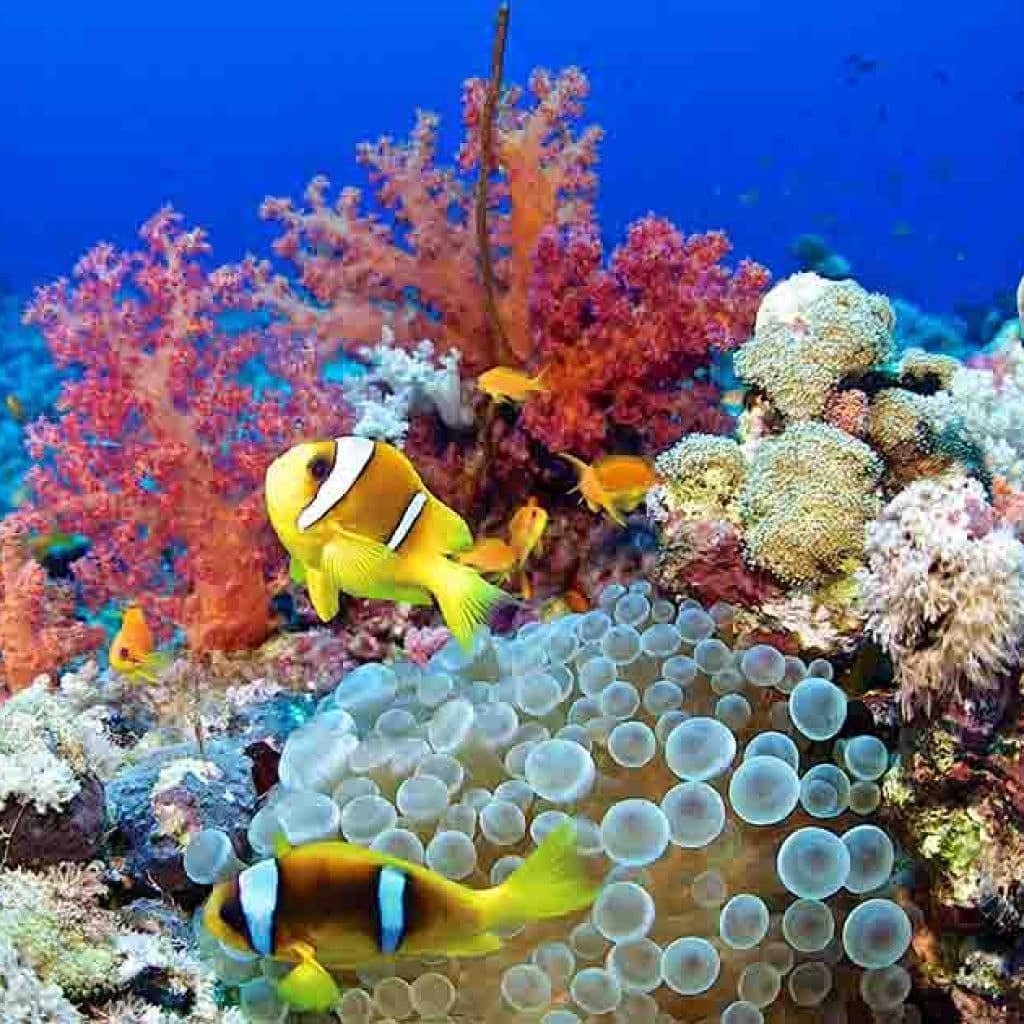
- Anthias — the orange cloud hovering over every healthy coral head. If they are there, the reef is in good shape.
- Butterflyfish and angelfish — including the Red Sea bannerfish and the emperor angelfish, one of the most photographed fish in Egypt.
- Parrotfish — you will usually hear them crunching coral before you see them. They are the reason Egypt has white sand.
- Sergeant majors, wrasse, groupers — the everyday residents of any reef wall.
- Giant moray eels — tucked into holes with their mouths opening and closing. That is breathing, not threatening.
Common, but never guaranteed
- Green and hawksbill turtles — reliable at Abu Dabab near Marsa Alam, frequent around the Giftun reefs.
- Blue-spotted stingrays — resting under coral overhangs and in the sand.
- Napoleon wrasse — large, curious, and unmistakable once you have seen one.
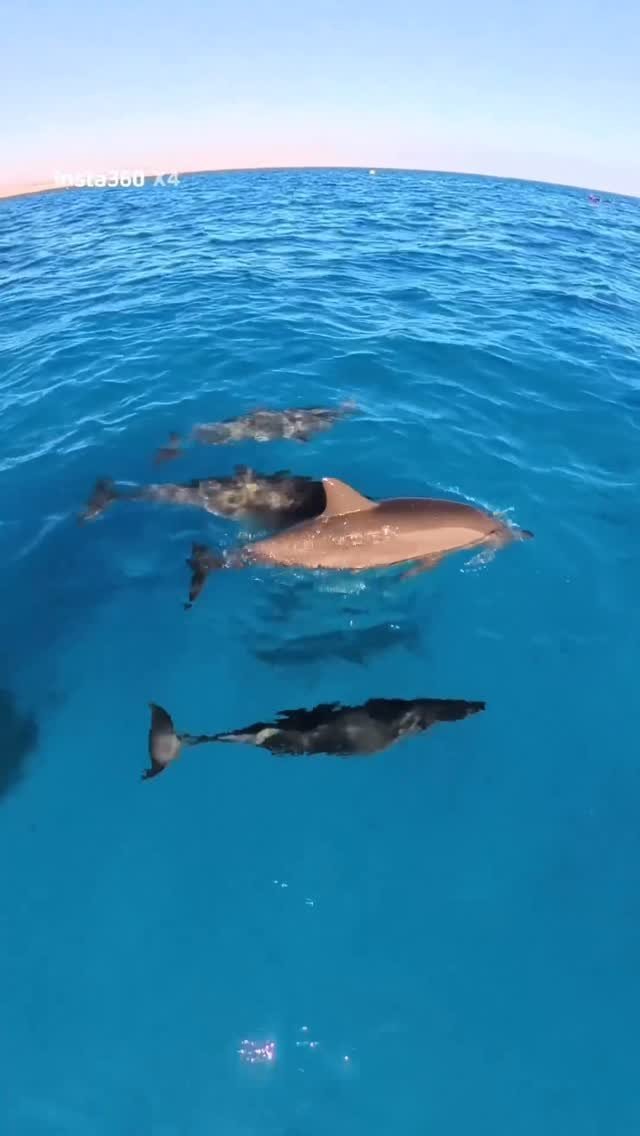
- Spinner dolphins — resident pods at Shaab El Erg and Samadai. Wild animals: often present, never on schedule.
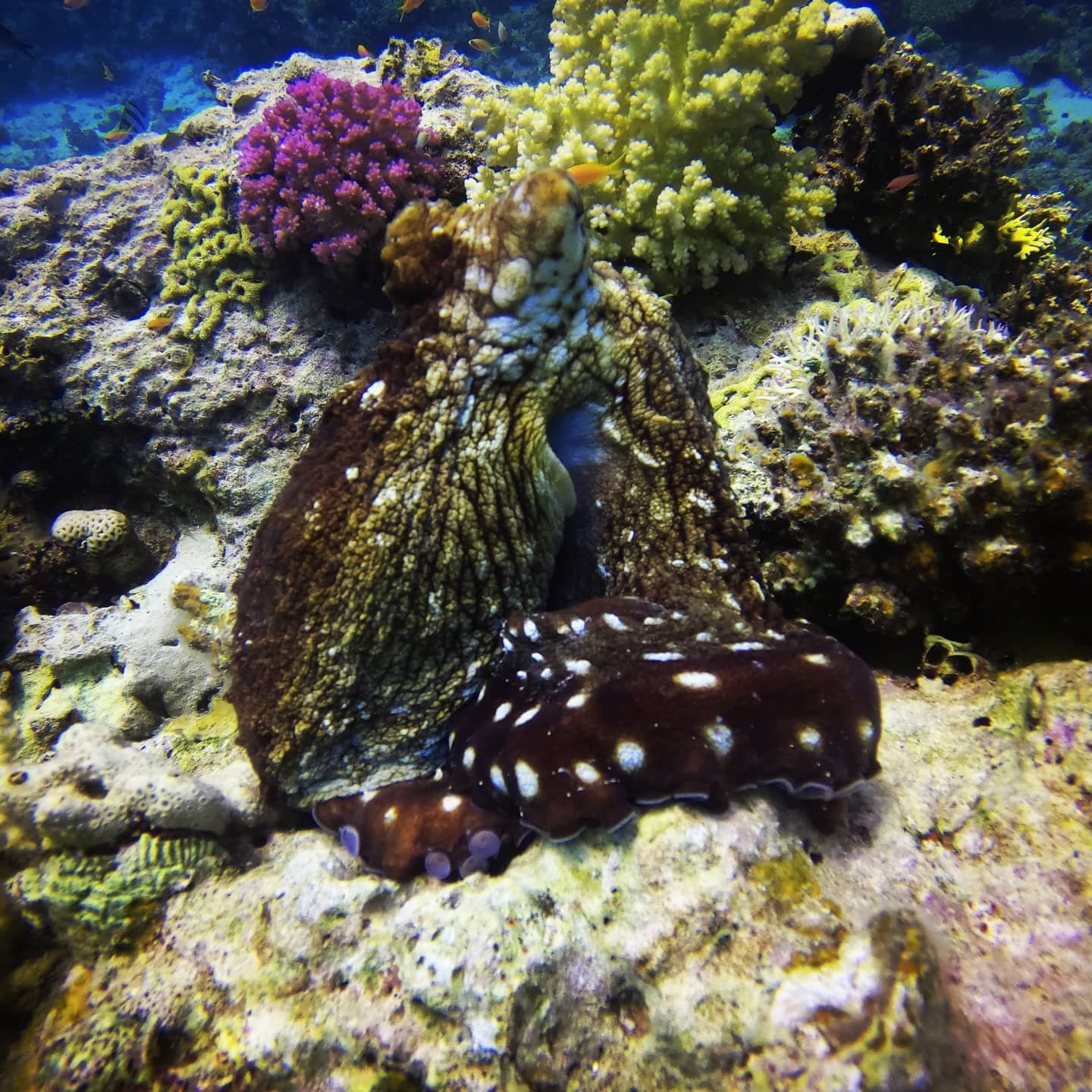
- Octopus and cuttlefish — there far more often than they are noticed.
Will you see sharks in the Red Sea?
Sometimes — and the honest answer is that it depends on where and when. Whitetip reef sharks are the everyday shark of Egyptian reefs, usually resting on the sand under a coral head. Oceanic whitetips appear around offshore reefs such as Elphinstone, mostly in October and November. Hammerheads are a deep-south, offshore proposition and not a Hurghada day-trip animal.
Any operator promising sharks is selling a story. Autumn, offshore, and patience are what actually improve your odds.
What about dugongs and whale sharks?
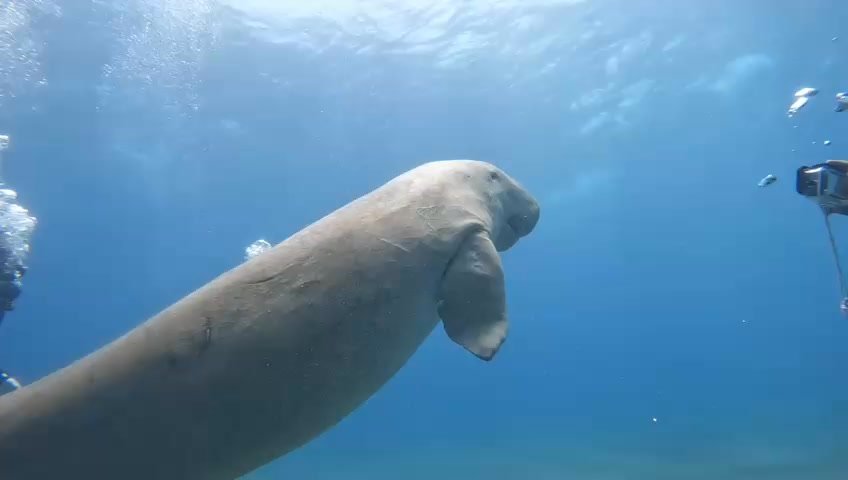
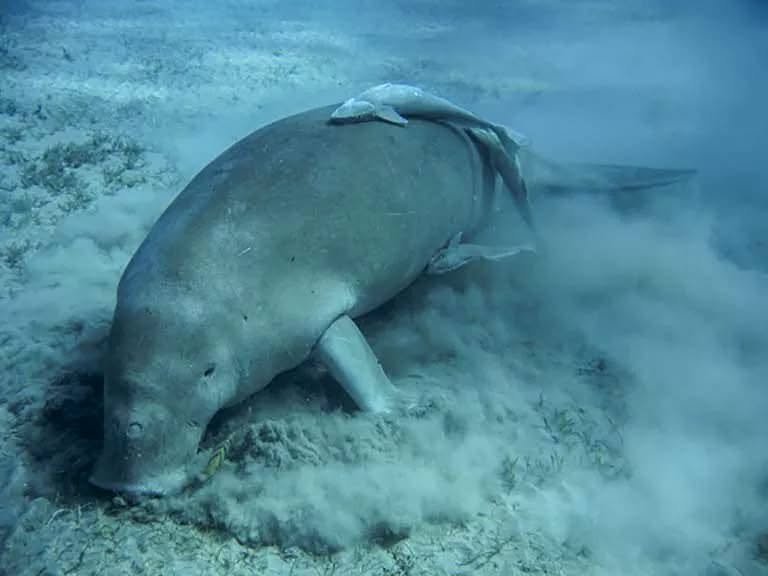
Dugongs graze the seagrass at Abu Dabab, south of Marsa Alam. They are genuinely there — and genuinely wild, so plenty of visitors miss them. Whale sharks pass through in late spring and early summer. Encounters are real but rare enough that no honest operator builds a trip around them.
What you will not see
Worth saying plainly: no coral reef anywhere looks like a fully saturated documentary shot at ten metres depth. Red light is absorbed first, so below about five metres reds and oranges fade to blue-grey until a torch or a camera flash brings them back. The colour is real — the light just is not.
How to see more of it
Slow down. New divers cover ground; experienced divers hover in one place and let the reef resume its business. The single biggest upgrade to what you see is buoyancy control — being able to hold position without stirring sand or crushing coral.
Beyond that: dive early, look into holes rather than across open water, and ask your guide what lives on that particular site. Browse the reefs themselves at Red Sea dive sites, or book a two-dive day and start looking.